Stack of Books Watercolor Clipart Bundle for Designers
If you have ever needed book-themed visuals for a project, you know the struggle. Stock photography often looks stiff or overly polished. Vector icons can feel generic. And raw scans of real books rarely integrate cleanly into a layout. That middle ground—where handcrafted warmth meets practical usability—is exactly where the Stack of Books Watercolor Clipart Bundle lives.
What Makes Watercolor Book Illustrations Different
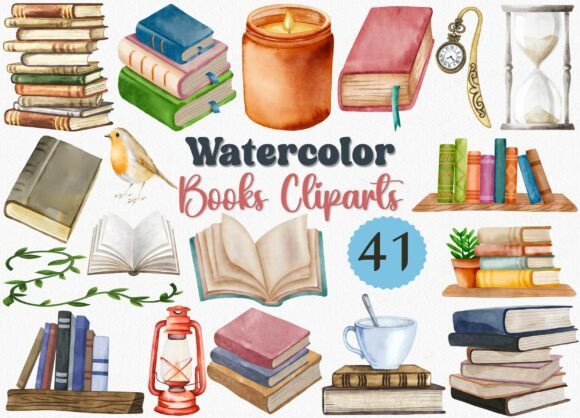
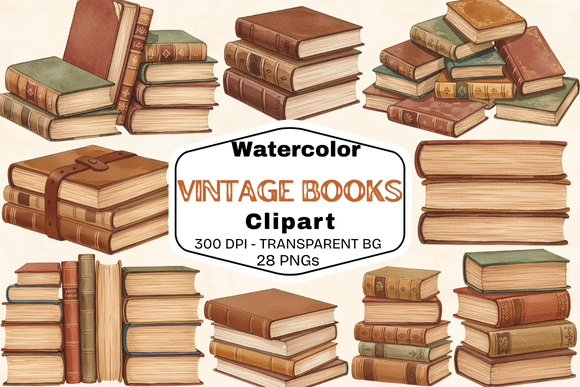
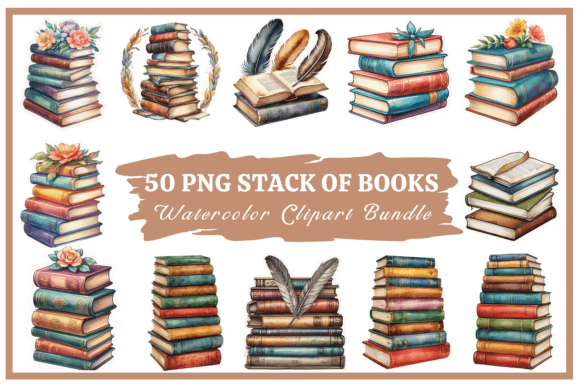
This bundle delivers hand-painted watercolor textures of stacked books in various arrangements. Some piles lean slightly, others sit perfectly upright. A few spreads show open books with visible pages. The color palette leans toward earthy tones: deep burgundy, forest green, navy blue, mustard yellow, and soft neutrals. The watercolor edges carry slight bleeding and uneven saturation, which gives each stack an organic, tactile feel that vector illustrations simply cannot replicate.
The personality here is warm, approachable, and slightly nostalgic. These are not clinical textbook illustrations. They look like something you might find in a cozy independent bookstore or in a hand-drawn journal entry. That makes them particularly useful for projects where you want to communicate knowledge, comfort, or creativity without feeling corporate or sterile.
Compared to a rigid serif font or a precise sans serif font, this clipart works more like a design accent. It brings texture and depth. Used thoughtfully, it can set the emotional tone of a layout faster than most typefaces can achieve on their own.
Where Stack of Books Watercolor Clipart Fits Best
These illustrations are not one-trick ponies. They work across surprisingly diverse applications, provided you match the style to the context.
Editorial and Publishing Projects
Book covers, reading lists, author websites, literary magazine spreads, and library newsletters all benefit from imagery that reinforces the subject matter. Using the Stack of Books Watercolor Clipart Bundle on a book club flyer or a publisher's social media graphic immediately signals what the content is about. The hand-painted quality also helps smaller publishers and independent authors stand out from big corporate layouts that rely on stock photography.
Brand Identity for Bookish Businesses
Coffee shops that sell books, reading nook furniture brands, literary subscription boxes, and independent bookstores all need visual assets that feel personal. A watercolor stack of books works beautifully in logo design, on packaging, or as a repeating pattern on tissue paper and bookmarks. When you pair it with a clean sans serif font for the business name, the contrast between organic illustration and modern typography creates a memorable brand identity.
Educational and E-Learning Materials
Course workbooks, classroom posters, online lesson thumbnails, and university marketing materials can feel dry if over-reliant on text and diagrams. Dropping in a watercolor book stack as a section header or chapter divider adds visual interest without distracting from the content. The warm tones also make educational materials feel more inviting for adult learners and younger students alike.
Social Media and Content Marketing
Bloggers, content creators, and marketers constantly need fresh visuals for Instagram posts, Pinterest pins, YouTube thumbnails, and email headers. The Stack of Books Watercolor Clipart Bundle gives you consistent, recognizable imagery that ties your content together. If you run a channel about literature, self-development, or history, having a signature visual style built around these illustrations helps build audience recognition faster than mixing random stock photos each week.
Personal and Craft Projects
Planner stickers, bullet journal layouts, greeting cards, wedding reading signs, and nursery decor all benefit from the gentle texture of watercolor art. Because the bundle includes multiple arrangements and color variations, you can mix and match without worrying about duplicate-looking elements. This is where the bundle really flexes its value for hobbyists who want professional-looking results without commissioning custom art.
How Book Imagery Influences Perception and Readability
Visual elements communicate before a single word is read. A watercolor stack of books carries connotations of learning, leisure, tradition, and introspection. When you place it on a landing page or a brochure cover, viewers subconsciously associate your brand with those qualities. This is not about manipulation—it is about visual shorthand that helps audiences understand what you offer within seconds.
In terms of readability and visual hierarchy, watercolor clipart behaves differently than hard-edged vectors. The soft transitions and irregular edges demand breathing room. Crowding text too close to a watercolor illustration makes both elements harder to parse. Instead, treat the clipart as a central visual anchor: place it prominently, let the surrounding text recede slightly, and use generous white space. This approach mirrors modern typography practices where generous margins and clear focal points improve comprehension.
For brand perception, the hand-painted quality signals that you care about craft. It implies attention to detail and a willingness to invest in quality design assets. That matters whether you are selling handcrafted journals, running a literary agency, or teaching creative writing workshops. The consistency of using the same clipart bundle across a website, social media, and printed materials also reinforces professionalism. Audiences learn to recognize your visual language, which builds trust over time.
Practical Guidance for Choosing and Using This Bundle
Before you download and drop these illustrations into a project, take a moment to evaluate fit.
- Check your existing color palette. The bundle uses muted, earthy tones. If your brand relies on bright neons or monochrome minimalism, these illustrations may clash unless you selectively modify colors. Some bundles include layered files that allow recoloring in design software. Confirm whether that option is available.
- Consider your audience. Watercolor book stacks work beautifully for adult audiences, educational contexts, and creative professionals. They may feel out of place in ultra-modern tech branding, financial services, or industrial packaging. Match the visual personality to the emotional response you want readers to feel.
- Test resolution for your output medium. Print projects need higher resolution than web graphics. Confirm that the files in the bundle meet your requirements for book covers, posters, or packaging. For digital use, you can usually scale down without issue, but scaling up may reveal pixelation or loss of watercolor detail.
- Think about font pairings early. A serif font like Garamond or Georgia complements the traditional, literary feel of a watercolor book stack. A clean sans serif font like Montserrat or Inter creates contrast and keeps the layout modern. A script font or handwritten font can work if the project leans personal or informal, but be cautious about stacking too many organic textures together—it can become chaotic. Test two or three pairings before committing.
When using this clipart in commercial projects, review the license terms. Some bundles restrict use in logo designs, merchandise, or digital templates for resale. Others allow full commercial use with no attribution. Understanding the licensing up front prevents legal headaches and ensures you can use the assets freely as your business grows.
Pairing the Clipart with Typography
Let me offer a specific observation: watercolor textures and display fonts often compete for attention if both are highly decorative. If the clipart has heavy saturation and visible brush strokes, pair it with a neutral, highly readable typeface. This keeps the overall composition balanced. For book covers or social media graphics, consider placing the title in a bold serif font or a modern slab serif directly on or beside the illustration, then supporting text in a lighter weight sans serif. The contrast between textured image and crisp type creates a natural hierarchy that guides the reader's eye.
If the clipart is used as a background element—say, a faint stack behind title text—you can afford more decorative typography. But as a rule, let the illustration lead the emotional tone and let the typography handle clarity and structure.
Real Examples That Work
Imagine an independent publisher launching a series of classic novel reprints. Using the Stack of Books Watercolor Clipart Bundle as a consistent visual element across all book covers creates a recognizable series identity. Each cover gets a different color variation, but the style ties them together. Readers browsing a bookstore or scrolling online immediately recognize that these books belong together.
Consider a life coach who writes a weekly newsletter about personal growth. Each edition opens with a watercolor book stack and a clean sans serif header. Subscribers start associating that visual with thoughtful content. The newsletter feels more like a curated artifact than a generic email blast. Over months, that consistency builds a stronger connection than changing visuals every week.
Or think of a wedding stationery designer who offers a literary-themed invitation suite. The watercolor book stacks appear on the save-the-date, the invitation, and the thank-you card. The hand-painted aesthetic matches the romantic, timeless feel of a wedding while the book theme appeals to couples who bonded over reading. It is a niche application, but it demonstrates how versatile this type of asset can be when matched with the right audience.
The Stack of Books Watercolor Clipart Bundle is not a solution for every project. But when your content revolves around reading, learning, storytelling, or reflection, it provides a visual language that stock photography and vector icons cannot touch. The key is knowing where it fits, respecting its texture, and pairing it with typography that gives it room to breathe. Do that, and you will have a go-to design asset that serves you across print, digital, branding, and personal projects for years to come.