Using Watercolor Floral Corner Borders in Modern Design Projects
When you need to add a touch of elegance without overwhelming your layout, watercolor floral corner borders offer a versatile solution. These decorative elements blend the softness of hand-painted art with the precision of digital design, giving you organic detail that feels both refined and approachable. Unlike rigid geometric frames, these borders bring natural movement and gentle color transitions to your compositions. Whether you're working on wedding invitations, branding packages, or editorial layouts, these corner accents can elevate your visual storytelling in subtle yet meaningful ways.
The Visual Appeal of Soft, Painted Edges
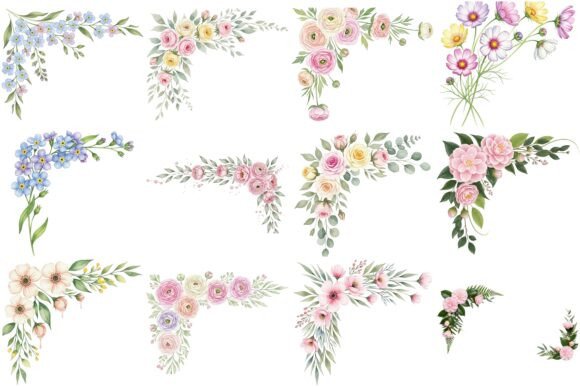
Watercolor floral corner borders are defined by their translucent washes, gentle color bleeds, and irregular petal forms. They mimic the behavior of real watercolor on paper, where pigment pools at edges and blends unpredictably. This creates a sense of authenticity that purely digital vector borders often lack. The style leans toward romantic and organic, with petals that appear to float rather than sit rigidly in place. Leaf shapes typically taper naturally, and stems curve with botanical realism rather than mechanical symmetry.
The overall personality of these borders is warm, inviting, and slightly nostalgic. They evoke handmade stationery, botanical illustrations from the Victorian era, and modern cottagecore aesthetics. Yet they remain polished enough for professional applications. The transparency inherent in watercolor allows them to sit gently over background colors or textures without fighting for attention. This makes them an excellent choice for designers who want decorative framing that enhances rather than dominates the page.
Where Watercolor Floral Corner Borders Shine Across Projects
These borders work exceptionally well in projects where emotion and personal connection matter. Wedding invitations, save-the-dates, and thank-you cards benefit from the soft romantic feel. For brand identity packages, particularly for florists, bakeries, skincare lines, and lifestyle bloggers, watercolor corner borders can become a signature framing element across business cards, packaging, and social media templates. They help create a cohesive visual system without requiring custom illustrations for every piece.
In editorial design, these borders work beautifully for chapter openings, pull quotes, and sidebars in magazines or books focused on gardening, wellness, travel, or lifestyle. They also suit digital products like printable planners, art prints, and digital scrapbooking kits. For web design, using them sparingly on headers, footers, or around call-to-action sections can add personality without slowing load times, especially when exported as lightweight PNG files with transparent backgrounds.
Small business owners and entrepreneurs will find these borders particularly useful for creating professional-looking materials without hiring an illustrator. A bakery can use them on menu cards and gift tags. A yoga studio might incorporate them into class schedules and promotional flyers. The key is consistency using the same border style across all touchpoints reinforces brand identity and builds recognition over time.
How These Borders Influence Readability and Brand Perception
Unlike full-page frames or busy background patterns, corner borders frame content without competing with it. They draw the eye inward toward your text or image, establishing a natural visual hierarchy. This subtle guidance helps readers focus on your message while still enjoying the decorative context. When paired with a clean sans serif font for body text or a delicate script font for headings, the contrast between structured type and fluid painted edges creates a pleasing tension that feels curated rather than chaotic.
From a branding perspective, watercolor floral corner borders signal attention to detail and a human touch. They suggest the brand values craftsmanship, beauty, and personal connection. This can be especially effective for small businesses and creators who want to differentiate themselves from corporate competitors. The organic imperfections of watercolor imply authenticity, which resonates with audiences tired of sterile, mass-produced design.
Professionalism comes through in how you deploy these borders. Using them consistently across a logo design, packaging, and digital assets shows intentionality. Overusing them or applying them to every page can dilute their impact. Restraint signals confidence. For example, using a delicate floral corner border only on your homepage hero section and your packaging labels creates a memorable motif without overwhelming the viewer.
Practical Guidance for Choosing and Using Watercolor Floral Corner Borders
Start by evaluating your project's tone. Romantic, vintage, or nature-inspired themes align naturally with watercolor borders. Minimalist or industrial brands may clash with the soft aesthetic. If you're unsure, test the borders on a small scale such as a single social media template or one product label before committing to a full rebrand.
Consider font pairing carefully. These borders pair well with serif fonts for a classic, elegant look. A premium font in a refined serif style can echo the sophistication of the watercolor art. For a more modern feel, combine them with a clean sans serif or a handwritten font that shares the organic quality of painted strokes. Avoid pairing with heavy, blocky typefaces that compete with the delicacy of the borders. Test several combinations in your layout software and step away for a day before making final decisions.
Review the included styles and file formats carefully. Some watercolor floral corner border sets offer multiple color variations, sizes, and orientations. Others may include only one style. Look for sets that provide high-resolution PNG files with transparent backgrounds, as these give you maximum flexibility in layering. If you're using them in print, ensure the resolution is at least 300 DPI. For digital use, 72 DPI PNGs or SVGs work well. Some sets also include editable vector files, which allow you to recolor or scale without quality loss.
Readability considerations matter more with decorative borders than with simple lines. Ensure the watercolor elements do not crowd your text or create visual noise near important copy. Leave adequate margin space between the border and your content. A good rule of thumb is to keep borders at least a quarter inch away from text in print, and around twenty pixels in digital layouts. Also consider background color light or white backgrounds let the watercolor remain soft and legible, while dark backgrounds may cause the lighter washes to disappear.
Finally, review the commercial licensing before using these borders in client projects or products for sale. Many watercolor assets come with standard commercial licenses, but some restrict use in certain ways like limiting the number of copies or requiring attribution. Always read the terms carefully. If you're creating templates or printables for resale, check whether the license covers redistribution. A reputable set will clearly state whether it is a commercial font or design asset, and whether extended licensing is available for larger distribution.
For designers building brand identity systems, watercolor floral corner borders can become a signature element. Use them consistently across your logo design, website headers, email signatures, and product packaging. This repetition builds brand recognition and creates a cohesive visual language that clients and customers will remember. For social media graphics, consider using the same border style across all platforms to maintain visual continuity. Even a simple Instagram quote graphic framed with a consistent floral corner border can reinforce your brand's aesthetic without additional effort each time.
Ultimately, the best use of watercolor floral corner borders comes down to balance. Use them to enhance, not overwhelm. Keep your layouts clean, your typography thoughtful, and your color palette complementary. When applied with intention, these borders become more than decoration they become a defining element of your visual identity.