Watercolor Apple Clipart: A Designer's Guide to Style and Use
If you have spent any time browsing design assets lately, you have likely come across Watercolor Apple Clipart and wondered whether it deserves a spot in your toolkit. The answer depends entirely on the story you want to tell. These aren't the flat, cartoonish apples of clipart past. Watercolor apple clipart brings a handcrafted, organic quality that feels far removed from sterile vector shapes. The edges bleed softly, the colors pool and blend, and each piece carries the subtle unpredictability of real watercolor paint on paper. That imperfection is precisely what gives it personality.
For designers, marketers, and small business owners who want warmth without sacrificing professionalism, this style of clipart offers a rare balance. It feels approachable yet polished, artisanal but not rustic to the point of being unusable in commercial work. Whether you are creating packaging for a farm-to-table brand or designing social media graphics for a wellness coach, watercolor apple clipart can anchor a visual identity that feels genuine.
Visual Characteristics and Personality
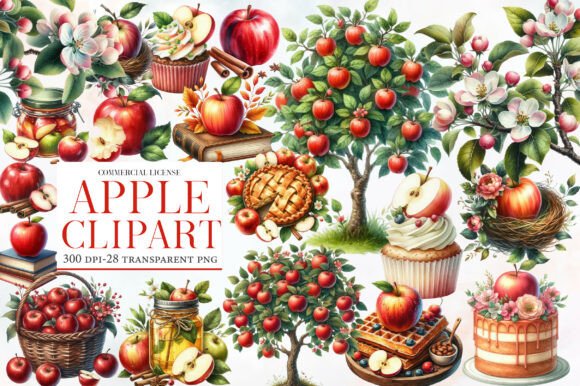
Watercolor apple clipart is defined by its soft translucency and layered color application. Unlike solid vector icons, these illustrations often incorporate multiple washes of red, green, yellow, or pink, with darker shadows collecting near the stem and lighter highlights catching the light on the fruit's curve. The texture of the paper grain often shows through, adding a tactile dimension that digital-only designs can lack.
The style leans heavily into what designers call the handwritten font or handcrafted aesthetic, even though we are talking about illustration. That same human touch that makes a script font feel personal is at work here. The apples may have slightly asymmetrical shapes, visible brush strokes, and occasional splatters or drips. These aren't flaws. They are the visual equivalent of a live brush meeting paper, and they signal authenticity to your audience.
Personality-wise, watercolor apple clipart can swing from whimsical and playful to elegant and refined depending on the color palette and execution. A muted blush pink apple on a cream background reads differently than a bold crimson apple with visible granulation. The former suits wedding invitations or boutique branding. The latter works for a cider label or a fall harvest campaign. The range is broader than you might expect from a single fruit subject.
Where Watercolor Apple Clipart Shines in Real Projects
The real strength of Watercolor Apple Clipart is its versatility across both digital and print applications. Here are the contexts where it consistently delivers the strongest visual impact:
Brand Identity and Logo Design
A small business selling handmade preserves, organic produce, or natural skincare can use watercolor apple clipart as a logo mark or brand accent. The organic texture communicates freshness and care in a way that a crisp vector never could. Paired with a clean sans serif font for the company name, the clipart becomes the emotional anchor while the typography handles the professional credibility.
Packaging and Label Design
Watercolor apple clipart is practically made for packaging. A jar of apple butter, a bar of soap scented with apple cider, or a bag of dried apple chips all benefit from the soft, edible-looking texture of watercolor illustration. The clipart wraps around physical products with a warmth that feels less commercial and more like something from a local artisan.
Editorial and Blog Design
Bloggers and publishers covering food, health, parenting, or seasonal content will find watercolor apple clipart invaluable for headers, dividers, and pull quotes. It softens the reading experience and breaks up dense text without jarring the reader. A centered watercolor apple between two paragraphs of a fall recipe post adds a moment of visual rest that keeps people scrolling.
Social Media Graphics and Web Design
Square Instagram posts, Pinterest pins, and Facebook cover images all benefit from the organic feel of watercolor clipart. The subtle gradients photograph well on screen and resist the flat, templated look that many social graphics fall into. On a website, using watercolor apple clipart as a background element or accent can create a cohesive seasonal campaign that feels intentional rather than generic.
Print Collateral and Stationery
Business cards, thank-you notes, recipe cards, and event flyers all take on a personal touch when watercolor apple clipart is involved. The texture translates beautifully to quality paper stocks, especially matte or uncoated finishes that absorb ink and echo the watercolor paper grain.
How Watercolor Apple Clipart Influences Brand Perception and Audience Engagement
Every visual choice you make sends a signal. When you choose watercolor apple clipart over a standard vector apple, you are telling your audience that you care about craft, that you value organic forms, and that you are willing to embrace a little imperfection. That is a powerful message in a market saturated with sterile, mass-produced visuals.
Brand identity relies on consistency, but consistency does not have to mean rigidity. Watercolor apple clipart can be part of a cohesive system when you use the same illustration style across every touchpoint. The same watercolor apple on your logo, your packaging, your website footer, and your email headers creates a thread that ties the entire brand together. That visual repetition builds recognition faster than any tagline ever could.
Readability and visual hierarchy also benefit when watercolor clipart is used thoughtfully. Because watercolor textures are softer than hard vector edges, they recede slightly in the visual field. This makes them excellent background elements or accent pieces that support your primary message without competing with your typography. A display font for your headline paired with a subtle watercolor apple behind the text creates depth without clutter.
Audience engagement often comes down to emotional response. The tactile, handmade quality of watercolor clipart triggers a psychological reaction that feels nostalgic and trustworthy. People linger on images that look like they were made by human hands. That extra half-second of attention can be the difference between a scroll-past and a click-through.
Practical Guidance for Choosing and Using Watercolor Apple Clipart
Not all watercolor apple clipart is created equal, and picking the right set for your project requires a bit of discernment. Here is a practical framework to help you evaluate your options.
Evaluate Project Fit Before You Buy
Start by asking yourself what role the clipart will play. Is it the hero of the design or a supporting accent? If it is the hero, you need a highly detailed illustration with rich color variation and strong contrast. If it is an accent, a simpler, more muted set will blend better and not overwhelm the layout. For logo or brand identity work, choose clipart that is distinctive enough to be recognizable at small sizes. A watercolor apple with too much fine splatter may turn into a muddy blob when scaled down to a business card.
Test Font Pairings Early
Watercolor apple clipart pairs beautifully with several font categories, but the key is contrast. A script font with flowing cursive letters echoes the brushstroke quality and creates a romantic, artisanal feel. A clean sans serif font like Montserrat or Open Sans provides a modern counterbalance that keeps the design from feeling overly fussy. A serif font in the Georgia or Playfair Display family adds a touch of editorial sophistication. Avoid pairing watercolor clipart with another heavily textured or handwritten font unless you are deliberately going for a maximalist look. The visual texture can cancel each other out.
Review Included Styles and Formats
When evaluating a commercial font or clipart bundle, look closely at what formats are included. PNG files with transparent backgrounds are essential for digital use. High-resolution files at 300 DPI matter for print. Some sets offer multiple color variations of the same apple, which is incredibly useful for maintaining a consistent look across a campaign. Others may include black-and-white versions, line art, or complementary elements like leaves and stems. A premium font or design asset bundle that includes multiple file formats and color options is almost always worth the investment over a cheaper, limited set.
Readability and Hierarchy Considerations
Watercolor apple clipart should never make your text harder to read. If you are placing text over the clipart, ensure the contrast is sufficient. A dark red watercolor apple behind black text may not offer enough separation. Consider using the clipart beside the text block rather than behind it, or apply a subtle shadow or white overlay to create separation. For editorial design, use the clipart as a break element between sections rather than as a background for body copy.
Commercial Licensing Is Non-Negotiable
Always verify the commercial license before using watercolor apple clipart in any project that generates revenue. Many design assets sold on creative marketplaces come with standard licenses that cover most small business uses, but there are often restrictions on reselling the clipart itself or using it in merchandise that is primarily the illustration itself. If you are a small business owner creating products to sell, pay close attention to the licensing terms. A slightly more expensive set with a clear commercial license saves you from legal headaches down the road. For personal projects like a family recipe book or a birthday card, a free or low-cost set with a personal use license is perfectly fine.
Real-World Applications and Observations
I have seen watercolor apple clipart used with great success in a farm box subscription service's weekly newsletter. The company used a single watercolor apple illustration as a consistent header element each week, changing only the color to match the season's featured fruit. Subscribers came to recognize that apple as the visual cue that a new newsletter had arrived. That is the power of consistent brand identity built around a well-chosen asset.
Another effective application came from a children's book self-publisher who used watercolor apple clipart on the cover and chapter headers. The soft texture created a gentle, bedtime-story mood that a flat vector could never achieve. The publisher paired the clipart with a handwritten font for the title and a clean serif for the body text. The contrast between the organic illustration and the structured typography made the cover feel both whimsical and professional enough for bookstore shelves.
On the flip side, I have seen watercolor apple clipart fail when it was used in a corporate presentation for a healthcare analytics firm. The context was all wrong. The soft, artisanal feel clashed with the data-heavy, clinical environment. Modern typography and clean infographics would have served that audience better. The lesson is straightforward: watercolor apple clipart carries strong emotional connotations. Use it where those connotations reinforce your message, and leave it out where they do not.
For marketers and content creators, consider building a small library of two or three watercolor apple variations in different colors and angles. Having options lets you maintain visual interest across a campaign without straying from your core brand identity. Rotate between a front-facing apple, one slightly tilted, and a cluster of smaller apples. The variation keeps repeat viewers engaged while the consistent style reinforces your brand's visual language.
Ultimately, Watercolor Apple Clipart is a tool, and like any tool, its value depends on how thoughtfully you apply it. When it matches the tone of your project, it can elevate your design from functional to memorable. When it is chosen for no reason other than trendiness, it becomes visual noise. Trust your instincts, test your pairings, and always design with your audience's expectations in mind. The best creative decisions are the ones that feel both intentional and effortless.